Why AI citations matter more than they look
A classic search result sends traffic to one page. An AI answer works differently: it reads several pages, merges them and presents the result as its own judgement. The pages it cites are the ones that decided what the user reads about your category, and often whether your brand is in the answer at all.
That makes citations the most practical signal in AI visibility. Your position in an answer tells you how you are doing; the sources tell you why. If three of the five most cited pages in your category are review sites where you are not listed, you know what to do on Monday morning. If a competitor's own guide is cited in half of the answers, you know which page to beat. Our guide on why AI recommends a competitor instead of you sorts these cases into four gaps.
Mentions and citations are not the same thing
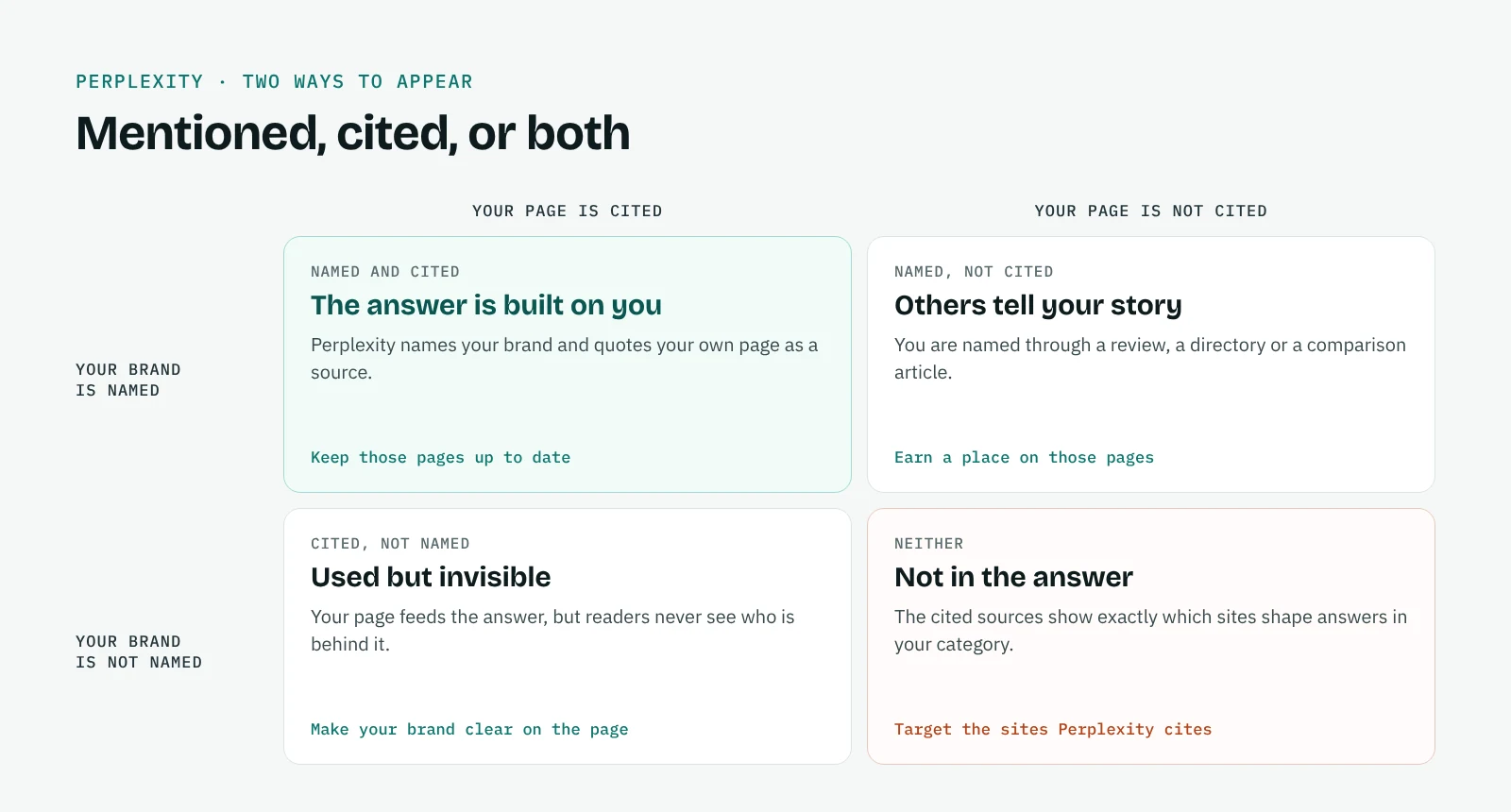
A mention is your brand's name in the text of the answer. A citation is a page used as a source, linked next to the answer or inside it. The two often travel together, but not always. Your brand can be named on the strength of someone else's page, and your page can be cited while your brand stays unnamed.
Each mismatch points to different work. Being named without being cited means others are telling your story, and the pages that tell it are where you should earn a place. Being cited without being named means your content is useful but does not make clear who is behind it. Our page on Perplexity, the platform most built on citations, walks through all four cases.
How to read the sources
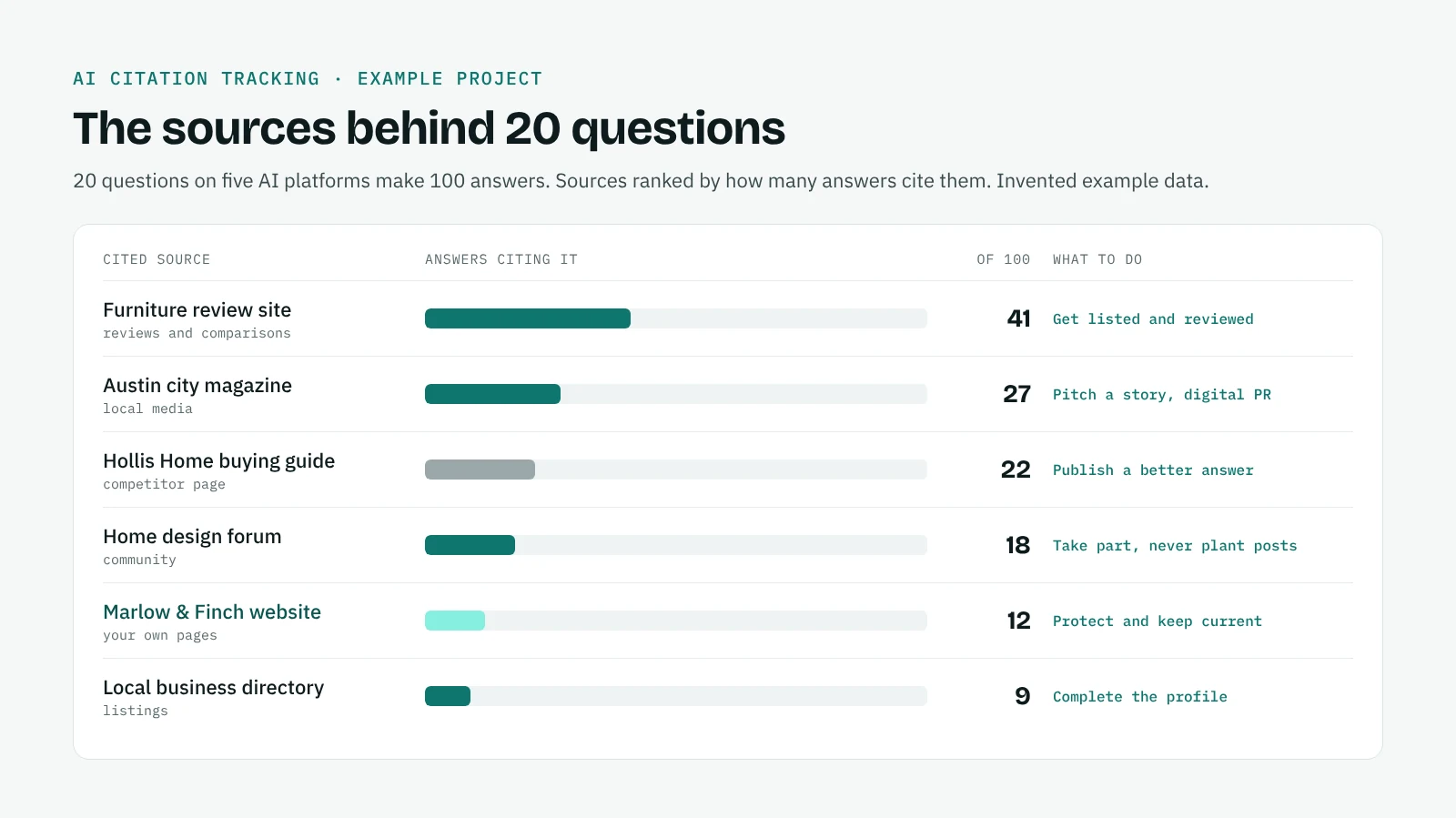
Start from frequency. A page cited once is an accident; a domain cited across many of your questions is part of how AI understands your category. Rank the sources by how often they come back and look at the top ten.
Then sort them by type, because each type calls for a different action. Review and comparison sites reward listings, reviews and outreach. Directories and marketplaces need a complete, consistent profile. Forums and communities reward genuine participation, never planted posts. Media and trade publications are a digital PR target. Competitors' pages show you which content to answer with a better page of your own. And your own pages, when they appear, are assets to protect and keep current. Our guide on how to improve your brand's visibility in AI search turns these actions into a plan.
Finally, compare platforms. Perplexity and Google AI Mode show sources on almost every answer; ChatGPT, Claude and Gemini cite pages mainly when they search the web, and answer from what they learned the rest of the time. A source that appears on several platforms at once deserves priority.
How QuotedBy tracks AI citations
QuotedBy runs your questions on ChatGPT, Claude, Gemini, Google AI Mode and Perplexity from your own Chrome, with the accounts you already use. Every answer is saved with its full text, links, a screenshot and the date, as explained in our guide on how to track brand mentions in AI search.
The sources are then calculated for you. Across the whole project you see the domains and pages ranked by how often they appear; inside each question you see the sources page by page, platform by platform. After every run, new sources and sources that disappeared are flagged next to the other changes, so you can tell when a review site starts appearing in your category or when one of your pages drops out.
The AI analysis of each question explains why competitors stand out and which actions to prioritise; on Free it runs with Chrome's built-in AI, on Pro with ours. With Pro, the links can also be exported to CSV or JSON for your own dashboards. When you act on a source, for example by getting listed on a review site, you can log it and measure the before and after.
Free AI citation tracking, and what Pro adds
The Free plan includes source tracking for one project with three competitors and 20 active questions on all five platforms, with 90 days of visible history.
Pro, at 24 € a month, raises the limits to 10 projects, 15 competitors and 80 active questions, keeps the full history and adds built-in AI analysis with no API key, alerts, CSV and JSON export, and PDF reports with your own logo.
Frequently asked questions
What is AI citation tracking?
It is the practice of recording which pages AI platforms cite when they answer questions in your category, how often each page appears and whether your own pages are among them.
Can I see which sources ChatGPT uses?
When ChatGPT searches the web, it shows the pages it used, and QuotedBy saves them with the answer. When it answers from what it already knows, there are no sources to see.
What is the difference between a mention and a citation in an LLM answer?
A mention is your brand named in the text. A citation is a page used as a source. You can have either without the other.
How do I get cited by AI?
Start from the pages AI already cites in your category: be present and well described on them, and publish pages that answer the same questions more clearly than the current sources.